
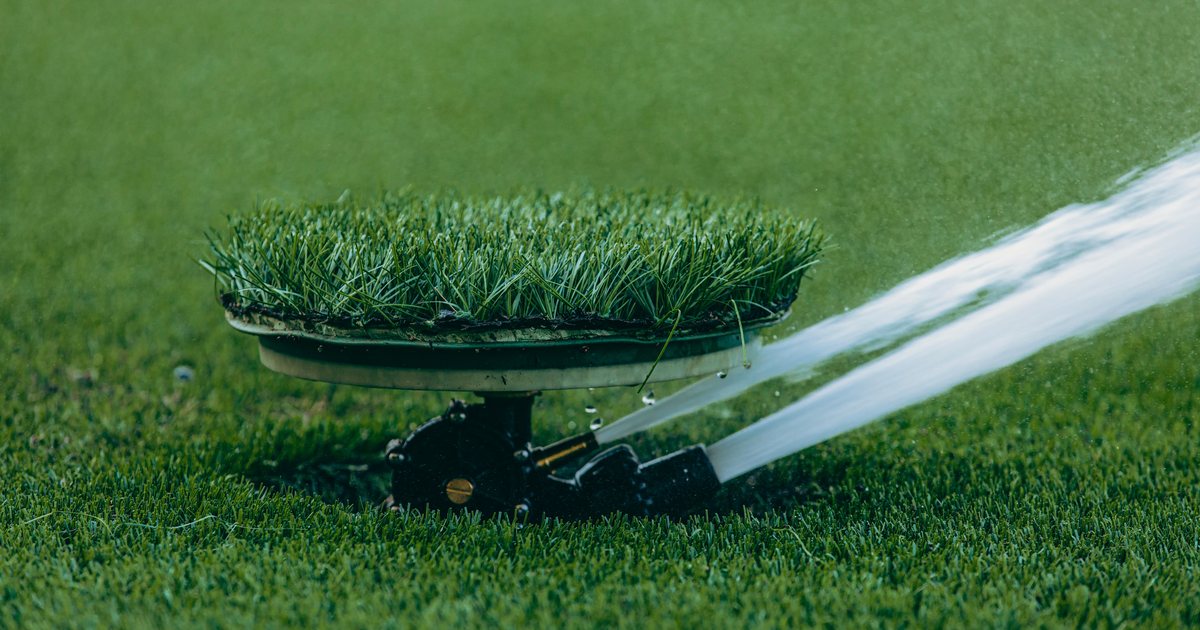
We weren’t using the sprinkler system anymore once the turf went in, so the plan was simple: cap the heads, cover them, done. Most of them were handled fine — capped below the base, buried, forgotten, no issue. One head near the back fence line, though, ended up sitting just below the new turf surface with no way to reach it. Looking back, there was a clue I brushed past early on: that stretch of turf along the fence felt a little softer and spongier underfoot than the rest of the yard, the kind of give you’d blame on a low spot in the base or infill settling unevenly. I walked over it plenty of times over the first couple of months and never thought twice. It wasn’t until I was digging a fence post hole nearby — replacing a rotted post, nothing to do with irrigation — that the post-hole digger stopped on something solid a few inches down that had no business being there. A little more work with a hand trowel and I was looking at the top of the old sprinkler body, capped exactly as I’d left it, just buried under more material than I’d planned for.
Why a Sprinkler Head Gets Lost Under New Turf
Turf and base material together add real height — often two to three inches once you count the compacted base, the turf backing, and the pile itself. A sprinkler head or valve box that sat flush with the old soil grade ends up buried below the new surface unless that height difference is specifically accounted for during installation. It’s an easy step to miss because the head is usually capped and invisible before the turf even goes down, so there’s nothing prompting anyone to double-check its new depth relative to the finished grade.
There’s a second factor that made my particular head worse over time instead of better: compacted base material doesn’t finish settling the day the plate compactor rolls over it. Foot traffic keeps working it down slightly, and repeated wetting and drying from our long rainy stretches does the same thing more slowly. A head with maybe half an inch of clearance right after installation can end up noticeably deeper a few months on without anyone touching it — which lines up with what I found. It wasn’t dramatically buried so much as it had settled out of reach gradually, probably why my walk-through right after the turf went in didn’t catch it.
What Actually Needs to Happen at Each Head
- Locate and mark every sprinkler head and valve box position before base material goes down, not after — once it’s covered, you’re relying on memory or old irrigation diagrams to find it again.
- For heads you’re keeping functional, install a riser extension so the head sits flush with the new, higher turf surface instead of buried below it.
- For heads and valve boxes you’re capping permanently, cap them below the base material line, but still cut a small access hole in the turf itself directly above valve boxes you might need to reach later (irrigation shutoffs, junction boxes) — capped and buried is fine for a sprinkler head, but a valve box you may need for future plumbing work should stay reachable.
- For our buried head specifically, I marked its location on the printed layout I keep for the yard, since digging it out to add a riser wasn’t worth it for a system we’re not using.
The riser route in step 2 is more work than it sounds — excavating around a line buried for years, breaking loose a corroded fitting, threading in a new piece without cross-threading it — and it’s tempting to shortcut by cutting a wider hole in the turf and packing extra infill or sand around the head instead. I’d skip that. A patched-in mound of loose material doesn’t compact like the rest of the base, so it settles unevenly and telegraphs through the pile as a visible bump within a season, and you end up doing the real excavation anyway with more turf disturbed than if you’d done it right the first time. A pop-up spray head is usually a quick riser swap; a rotor head fed by a swing joint has more fittings involved and a real chance one has gone brittle enough underground to crack when you try to break it loose.
Before You Install
Walk your yard with the irrigation system running (if it still works) and mark every head’s exact position with a flag before any base material goes down — it’s a five-minute step that saves a genuinely frustrating search later, especially for any head or valve box you might want access to again down the road rather than capping for good.
Telling a Buried Head From Just Hitting a Rock
If a shovel or post-hole digger stops on something solid anywhere near where old irrigation lines used to run, it’s worth checking before you pry at it or work around it. A rock has an irregular surface and doesn’t shift much once you’ve scraped the dirt back from its edges. What I hit had a distinctly round, smooth top once I’d cleared another inch of dirt off it, and a faint hollow sound when I tapped it with the trowel handle — something a solid rock won’t give you. If you’re not sure, clear a little more dirt sideways before prying; snapping what turns out to be a brittle old riser instead of a root is its own annoying repair on top of the one you started with.
Timing mattered too. I did this fix in early fall rather than mid-summer, mainly because the ground here is easier to work when it isn’t baked hard from weeks of heat, and you’re not digging in the kind of humidity that makes twenty minutes feel like an hour. With no urgent reason to reach a suspected buried head right away, waiting for a cooler stretch makes the job noticeably less miserable at no real cost.