
One corner of the backyard sits close to a downspout off the roofline — close enough that during one unusually heavy storm, I watched water pour directly onto that corner for a good twenty minutes straight, loud enough to hear from the kitchen window over the storm itself. I didn’t think much of it that night. A week later, walking the dog across that same corner, I noticed my foot sank slightly further than it should have — nothing dramatic, just a soft give underfoot the rest of the lawn didn’t have. I went back the next morning and pressed down with my heel in a few spots to compare: the rest of the yard felt firm and even, that one corner gave noticeably. That was enough to make me go looking underneath.
Concentrated Water Is Different From Regular Rain
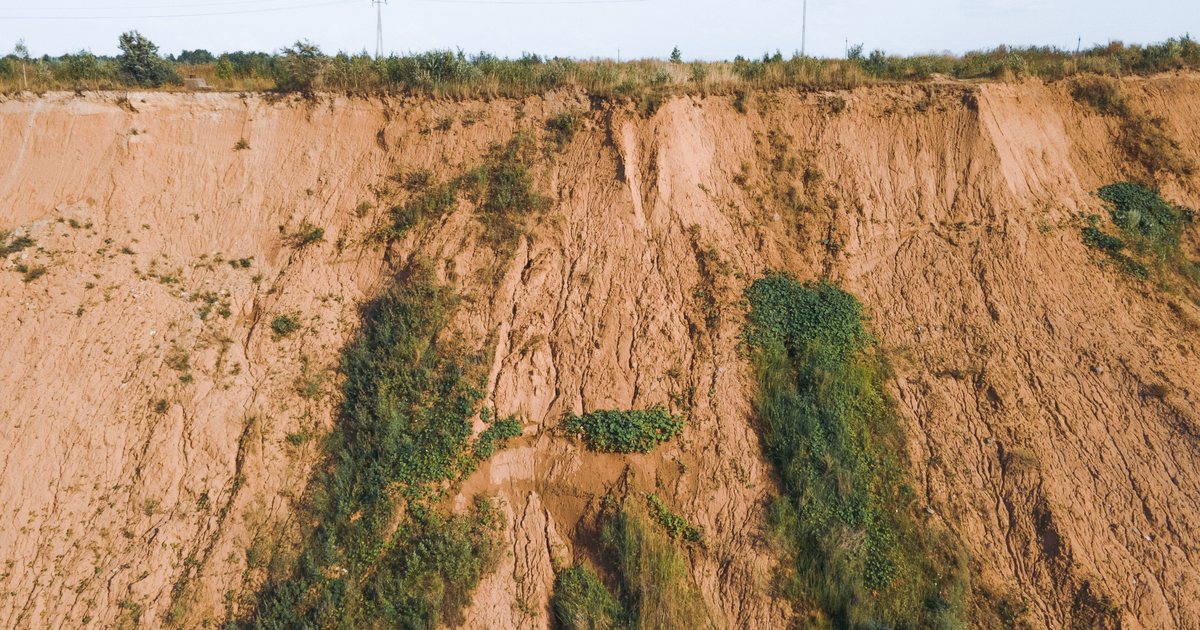
Compacted base material handles normal rainfall across an even lawn just fine — the water spreads out and drains down gradually. A downspout, a gutter with no extension, or any point where roof runoff concentrates into one spot is a completely different situation: instead of gentle, distributed water, that one corner is taking a small flood every time it rains hard, and compacted aggregate base will slowly erode under that kind of concentrated flow even though it holds up fine everywhere else. Pulling the turf back confirmed it — a visible channel had worn into the base material directly under where the downspout drains.
What’s actually happening underneath is more specific than “the base washed away.” Compacted aggregate base is a mix of particle sizes — coarser stone for structure, plus finer crushed material that fills the gaps between the larger pieces and gives it that dense, load-bearing feel once it’s properly tamped. Moving water washes the fine material out from between the stones first, the same way flowing water pulls sand out from between gravel in a streambed while leaving the gravel itself sitting there. Once enough of that fine material is gone, the coarse stone left behind is loose and effectively uncompacted even though it’s technically all still there — that looseness is the soft, sunken feel on top. There was also a second factor here alongside the downspout: that corner already had a very slight natural slope toward it, so it was catching some of the runoff crossing that section of yard on its way past too, not just the downspout’s own water.
Fixing the Washed-Out Spot
- Pulled the turf back from that corner and cleared out the eroded, loosened material down to solid, undisturbed base.
- Added fresh compactable aggregate base material, built back up in thin layers and hand-tamped between each layer rather than dumped in all at once, which is what actually gets it dense again instead of just loose fill sitting in a hole.
- Re-checked the grade so that corner sloped slightly away from the downspout rather than flat, giving new rainfall somewhere to go besides straight down into the same spot.
- Re-laid the turf and re-fastened the corner at tighter spacing, since a softer base underneath needs a bit more anchoring until it fully re-settles.
It’s tempting to shortcut step two — dump the new base material in all at once and just tamp the surface. I actually tried that on a small test patch first, out of impatience, and pressing on it afterward with my heel it still gave slightly, in a way the properly layered sections next to it didn’t. A hand tamper only really compacts a few inches deep at a time; dump the material in all at once and only the top inch or two actually compacts, leaving the material underneath still loose — the same soft-spot problem happening again, just deeper down and out of sight. If the channel here had been deeper or wider — a downspout with no splash block draining onto bare soil, or a longer storm — I’d also have considered a layer of woven geotextile fabric between the sub-base and the new aggregate, since that’s what keeps fine material from migrating out on a spot that erodes repeatedly. This corner wasn’t bad enough to justify that, but it’s the next thing I’d try if the spot ever acted up again after the downspout fix.
Stopping It From Happening Again
The real fix wasn’t the base repair — it was adding a downspout extension that carries the water a few extra feet away from the turf edge entirely, onto a gravel splash pad instead of directly onto the lawn. If any part of your yard sits under or near roof runoff, check that specific spot after the next heavy rain before assuming your whole base installation is a problem; concentrated water from a downspout erodes very differently than rain falling evenly across the yard, and the fix is redirecting the water, not just re-compacting the same spot repeatedly.
Telling This Apart From Ordinary Settling
A washed-out spot from concentrated water can look similar at first to ordinary turf settling, but there’s a way to tell them apart before pulling anything up. Ordinary settling shows up gradually over months, spreads across a wider area, and flattens out rather than leaving a defined edge. What I found under that corner was different — a clear channel with a defined path, running the direction water would flow off the roofline, and it showed up within about a week of one specific storm rather than creeping in over a season. If you can trace a soft spot back to a downspout, a slope, or anywhere water visibly concentrates during a hard rain, that’s a strong sign it’s erosion rather than plain settling — and the fix is different, since redirecting water solves erosion but does nothing for a base that’s just naturally compacting under everyday foot traffic.
If I’d wanted to pay someone instead of doing this myself, I’d expect a contractor to check the same two things I did first: how deep the actual erosion channel goes once the turf is pulled back, and where the water is really coming from, since patching the base without addressing the downspout just sets up the same repair again. A corner repair this size is a small job next to a base problem spanning a whole section of yard, and I’d expect the labor to reflect that scope rather than a full re-installation, though I haven’t gotten an actual quote to compare against doing it myself.
It’s now been several weeks and a few solid rains since I fixed that corner, and it’s held flat and firm the whole time. I can’t promise it’ll never move again — a repair like this is only as good as the compaction underneath it, and only more storms really prove that out — but with the downspout no longer dumping straight onto that spot, there’s no reason left for the same failure to repeat.