
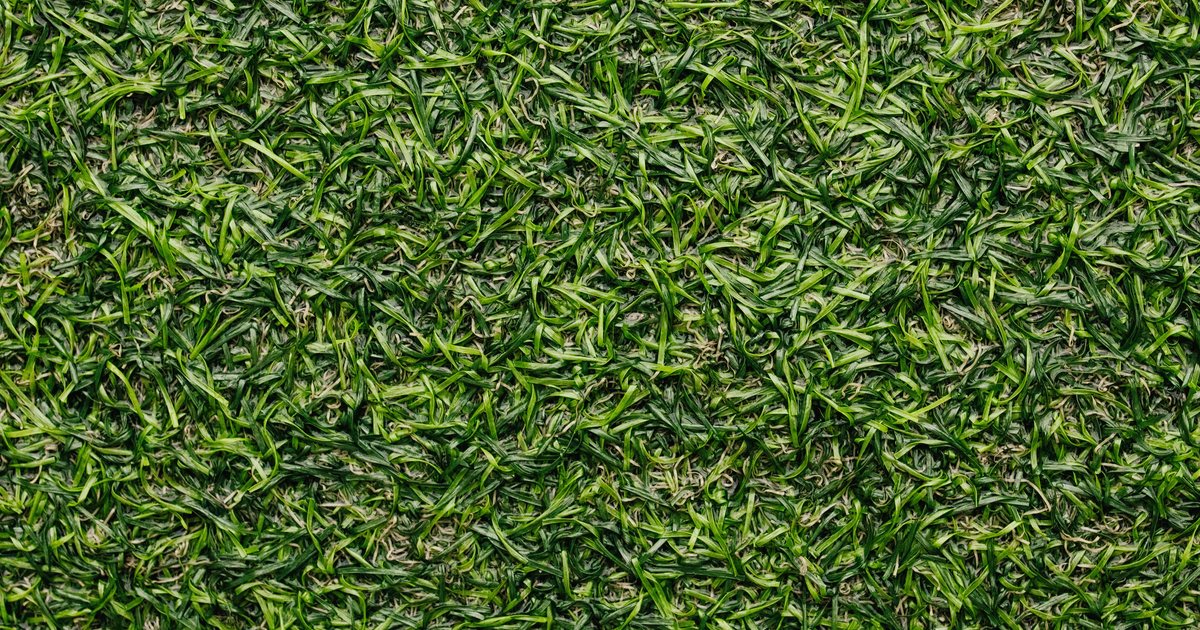
The base of our patio umbrella sat in the exact same nine-inch circle on the lawn for an entire summer. I didn’t notice how flat it had gone until the afternoon I finally moved the umbrella for more shade elsewhere on the patio — the blades were lying almost sideways, and running a hand across the spot felt slick and matted instead of springy, with none of the quick bounce-back a finger press gets from the rest of the lawn. When I finally moved it in the fall, that circle stayed pressed flat for weeks afterward — noticeably different from a spot where a chair sits for an afternoon and springs right back.
Weight Over Time Is Different From Brief Pressure
Turf fibers are genuinely resilient against short-term pressure — foot traffic, a chair moved around during a party, that kind of thing recovers within hours on its own. Sustained weight in one exact spot for weeks or months is a different mechanism: the fiber itself develops something closer to a permanent bend at the base, rather than just being pushed over temporarily. The longer the weight sits, the less willing the fiber is to spring back on its own once it’s removed, which is exactly why a season-long umbrella base left a mark that a few hours under a lawn chair never would.
What’s happening at the base of each blade is a bit like folding stiff plastic and holding it folded for weeks — a quick crease springs back, but one held long enough starts to “remember” that shape. Heat makes it worse in a climate like ours: our patio gets direct sun most of the afternoon, and warm fiber bends more easily than fiber that’s stayed cool, so a base sitting in full sun for hours a day likely set that flattened memory in faster than the same weight would somewhere shadier. The infill underneath the base was also more compacted than everywhere else when I checked — pushed down and outward instead of staying loose — which took away some of the support that normally helps blades stand back up.
Reviving the Flattened Spot
- Ran warm water over the flattened circle — not scalding, just warm from the hose left in the sun — since heat softens the fiber enough to make it more receptive to being worked back upright.
- Brushed against the direction the blades were leaning with a stiff nylon-bristle brush, working in small circular motions rather than just one direction across the flattened area.
- Repeated the warm-water-then-brush step twice more over the following two days rather than trying to force full recovery in one pass.
- Once the fibers were mostly upright, worked in a bit of infill around the base of that spot to help hold them there going forward.
I stuck with warm hose water instead of a hair dryer or heat gun — more heat works faster in theory, but it’s easy to scorch or slightly melt fiber tips with something that concentrated, and heat-damaged fiber doesn’t grow back the way real grass does. Warm water plus brushing is slower, but it’s close to impossible to actually damage anything with it. I was also tempted to force it upright in one long session the first afternoon, but fiber bent that long just leaned back down within the hour; spreading the same brushing across three days is what actually let it hold.
It came back close to normal after about a week, though if I look closely I can still make out a very faint outline of the umbrella base circle.
How Long a Fix Like This Should Hold
The faint outline from our umbrella base was still barely visible after about two months, fading further before disappearing once cooler weather arrived. A shorter stretch of weight recovers faster and leaves less trace — from watching ours, anything under about a month seems to bounce back with brushing alone, while three months or more is where the warm water step actually earns its place.
Doing the work in early morning or evening rather than the hottest part of the afternoon made it more pleasant and didn’t cost me any recovery time.
It’s worth knowing what this fix won’t fix, too. A flattened patch that’s also thinning down to bare backing, or fiber that feels brittle and snaps instead of bending, isn’t fiber memory — that’s heat or wear damage, and brushing and warm water won’t bring it back. That kind of spot needs to be patched, not revived.
What This Means for Anything Heavy That Sits in One Spot
If you’re planning to leave furniture, a planter, or anything heavy in one exact spot for an entire season, expect some degree of lasting flatness underneath it and plan to move it periodically if you can — even a few inches every month or two gives the fibers underneath a chance to recover before the flattening becomes as stubborn as ours did. For anything that has to stay fixed in place long-term, a furniture pad or paver placed on top of (not directly pressing into) the turf avoids the problem from the start.