
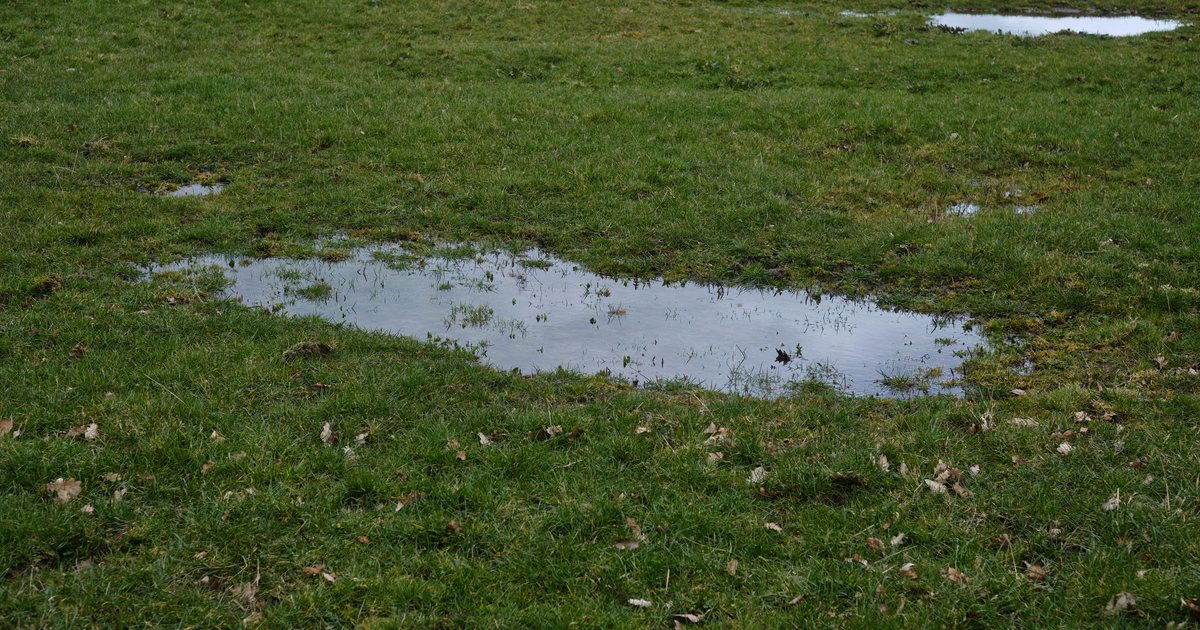
After a hard rain, most of the backyard would drain down within an hour or two like you’d expect — except one whole side of the yard, maybe a third of the total area, stayed soggy for most of a day. I didn’t catch it right away; the first two times, I chalked it up to a heavier-than-usual storm. It was the third time that I noticed the section was still wet at dusk while the rest of the yard had gone dry hours earlier, with a faint squelch underfoot and footprints that slowly filled back in with water. Not one puddle in one spot; a broad, spongy section that just held water everywhere across it.
The Difference Between a Local Puddle and a Base-Wide Problem
This distinction matters because the fix is completely different depending on which one you actually have. A single puddle in one spot (like a low corner or a spot right under a downspout) is usually a localized issue — a low grade point, a hole in a weed barrier, something specific to that exact location. A whole section staying soggy and spongy, though, points to the base material itself: either the wrong type of aggregate was used underneath (a sand-only base drains far worse than a proper crushed-stone base, since sand compacts down and loses its air gaps over time), the base wasn’t installed deep enough to let water actually move through it, or it wasn’t compacted correctly and settled into a denser, less permeable layer than it should be. Digging a small test hole in the soggy section confirmed it — the material underneath felt more like packed sand than the coarser crushed stone used elsewhere in the yard.
The mechanism: crushed, angular base rock locks together when compacted but still leaves small gaps between the sharp-edged pieces, and those gaps are what water travels through. Sand nests together far more tightly under a compactor and squeezes most of that pore space shut. There was also a second factor stacked on top: the landscape fabric under the base wasn’t a permeable geotextile, it was a heavier, near-solid weed barrier meant for garden beds. Whatever water did work down through the sand had nowhere to go once it hit that fabric, so it spread sideways instead of draining into the soil below. One bad material choice on its own would have been a slower problem; the two together are what kept that section wet.
How I Diagnosed It Before Digging Up Anything
- Watched where standing water actually persisted after two separate rain events, to rule out one being a fluke (a clogged gutter, unusually heavy single storm).
- Pressed down on the turf in several spots across the soggy section — a soft, spongy give underfoot in multiple spots (not just one) confirmed it was a base issue, not a single localized defect.
- Dug one small test hole down to the base material to check what was actually under the turf, rather than guessing.
- Checked whether the section had any slope at all — it was essentially flat, which meant even a correct base material wouldn’t drain quickly without help.
- Pulled back a corner of turf to check what fabric was under the base.
What the Fix Actually Requires
A local puddle can often be fixed with a re-grade or a weep-hole trick without touching the whole area. A base-wide drainage problem like this one can’t — it needs the turf pulled up, the wrong base material removed, and a proper compactable aggregate base put down at the correct depth with at least a slight slope built in. That’s a bigger job than most of the fixes on this site, and it’s worth confirming which situation you actually have (a five-minute test hole tells you) before deciding how much work the fix really needs.
I was tempted, at first, to try the cheaper shortcut — drill a few weep holes through the turf backing in the lowest-feeling spots. It wasn’t going to work: weep holes only give standing water an exit at the surface, they don’t fix a base that can’t move water sideways or down in the first place. That shortcut is fine for a localized low spot over a base that’s otherwise doing its job — it does nothing for a base that is the actual problem.
For my yard, that meant pulling up roughly 250 sq ft of turf, hauling out the old sand and solid landscape fabric, replacing the fabric with a permeable woven geotextile, and compacting 3 inches of crushed granite base in two lifts with a rented plate compactor. Materials ran a bit under $200, the compactor rental was $45 a day for two days, and it ate most of two weekends instead of one. I also got quotes from two local installers first — both came in between $800 and $1,400 for that same square footage, mostly labor.
How to Tell This From a Compacted-Infill Problem, and How Long the Fix Should Hold
Worth ruling out one look-alike before pulling up any turf. Infill that’s compacted or clogged with dirt can also make a lawn feel spongy, but it usually shows up as a soft, sunken feel spread evenly across the whole yard, not one section staying visibly wet for hours after everywhere else has dried. Rake or power-brush the suspect area and watch the next rain or two — if drainage improves, it was an infill problem, and a much cheaper fix. My section didn’t respond to brushing at all, which pointed at the base instead.
It’s now been through one full rainy season with no soggy patch returning, and I don’t expect that to change unless something disturbs the base again. If you’re planning this repair yourself, doing it in the driest stretch of the year you can manage is worth the wait — compacting damp-but-not-wet base material is finicky enough without also fighting an active rainy season for a dry window to work in.