
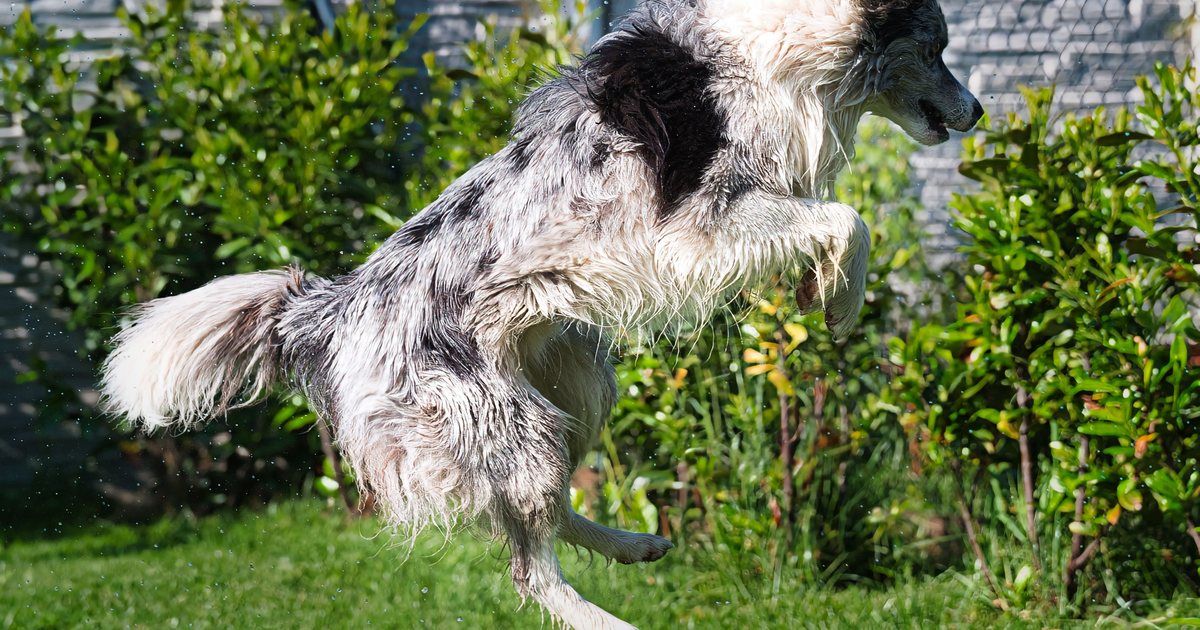
Along the narrow strip we run as a dog run against the side fence, I started noticing staple heads poking up out of the turf within about three months of finishing that section. The first sign wasn’t visual — it was catching a bare foot on something hard while checking the fence gate one evening. I got down and ran my palm along the seam line and found a staple head sitting proud of the pile by maybe an eighth of an inch, just enough to feel like a splinter of wire under my hand. I walked the whole stretch on my knees after that, parting the fibers every foot or so, and counted six raised heads along that fifteen-foot run — none fully out yet, but every one loose enough to wiggle with two fingers. Enough that I was worried about a paw catching on one, especially since our dog digs at the fence line whenever she hears something on the other side.
Why Staples Back Out in High-Traffic Spots
U-shaped staples hold entirely by friction — the two straight legs get driven into the compacted base and rely on the surrounding material gripping them tight, with nothing threaded or barbed to resist working its way back out. In a spot that gets constant pressure and scratching, which is exactly what a dog run is, that friction wears down faster than anywhere else in the yard, and the staple slowly backs up instead of staying seated.
There was a second factor I didn’t think about until I was already troubleshooting: heat cycling. That side of the yard gets full sun most of the afternoon, and both the turf backing and the base underneath warm up and expand slightly through the hottest part of the day, then contract again once things cool off. On its own that daily swing is barely noticeable, but over a few months it adds a small upward tug to every fastener in that stretch — not enough by itself to pull a staple in a low-traffic spot, but enough to stack on top of the scratching in one that was already losing grip. It’s not really a defect in the original install; it’s that a smooth-shanked staple was the wrong fastener for a spot carrying two kinds of stress at once.
What I Switched To
Rather than just re-driving the same staples deeper (which I tried first, and which only bought about six weeks), I pulled every staple along that stretch and replaced them with 6-inch galvanized spiral nails instead. The spiral thread bites into the ground and resists being backed out the way a smooth U-staple doesn’t.
The other shortcut I considered was just adding a second staple next to each loose one instead of switching fastener types — less pulling, less buying. I tried it on two of the six spots first, and both came loose again within about a month, same as the re-driven ones. Two staples in ground that’s already worked loose still hold by the same friction as one; doubling up doesn’t change the mechanism that’s failing, it just doubles the number of fasteners that will eventually fail the same way.
- Pulled the old staples with pliers, working underneath the head rather than yanking the turf.
- Drove spiral nails at roughly 4-inch spacing along that whole stretch — tighter than the standard 6-to-8-inch spacing used on the rest of the yard, since this spot takes more abuse.
- Used a rubber mallet rather than a hammer, which keeps the nail going in straight instead of bending under an off-angle strike.
- Re-brushed the infill back down around each new nail head.
Worth flagging: spiral nails take noticeably more effort to drive than a staple once the threads start biting into the base. Don’t rush that part with a full hammer swing — a bent nail is harder to back out cleanly than a bent staple ever was, and you don’t want to be digging a snapped-off tip out of your base afterward.
It’s been five months with nothing backing out since.
Ruling Out a Seam Problem First
Before pulling anything, it’s worth checking whether what you’re feeling is a loose fastener or an actual seam starting to separate, because the fix is completely different — re-fastening a failing seam with more nails won’t hold it. A fastener problem shows up as an isolated hard point every few inches, with the turf on either side staying flat when you press next to it. A seam problem shows up as a wider ridge or gap running along a straight line where two pieces of turf butt together, and pressing on either side reveals the edges no longer sitting flush. In our case every raised point was a single staple head, evenly spaced along backing that was otherwise flat, which is what told me it was a fastening issue and not a seam coming apart. If I’d been hiring this out, I’d expect an installer to check those same two things — wear on a pulled fastener’s legs, then the nearby seam — before deciding whether it’s a quick re-fastening job or one involving seam tape and glue, which takes longer.
Timing mattered too. I did the work in the early morning before the sun hit that fence line, partly because the base was still cooler and easier to drive nails into, and partly because it’s a far more comfortable hour to be on your knees pulling staples one at a time. Five months in, through a full stretch of summer heat, none of the replaced fasteners have backed out — which feels like about as long as I’d want to go before checking a high-traffic spot like this again, whatever fastener is holding it down.
Where Else This Applies
Any narrow, repeatedly-scratched-or-walked strip — a dog run, a gate path, the base of a slide or swing set — is a candidate for spiral nails from the start rather than standard staples, even if the rest of the yard is fine with staples at normal spacing. If you’re not sure which spots on your own install will take that kind of repeated, concentrated stress, it’s worth over-fastening those specific areas up front rather than waiting for staples to start backing out and doing it twice.