
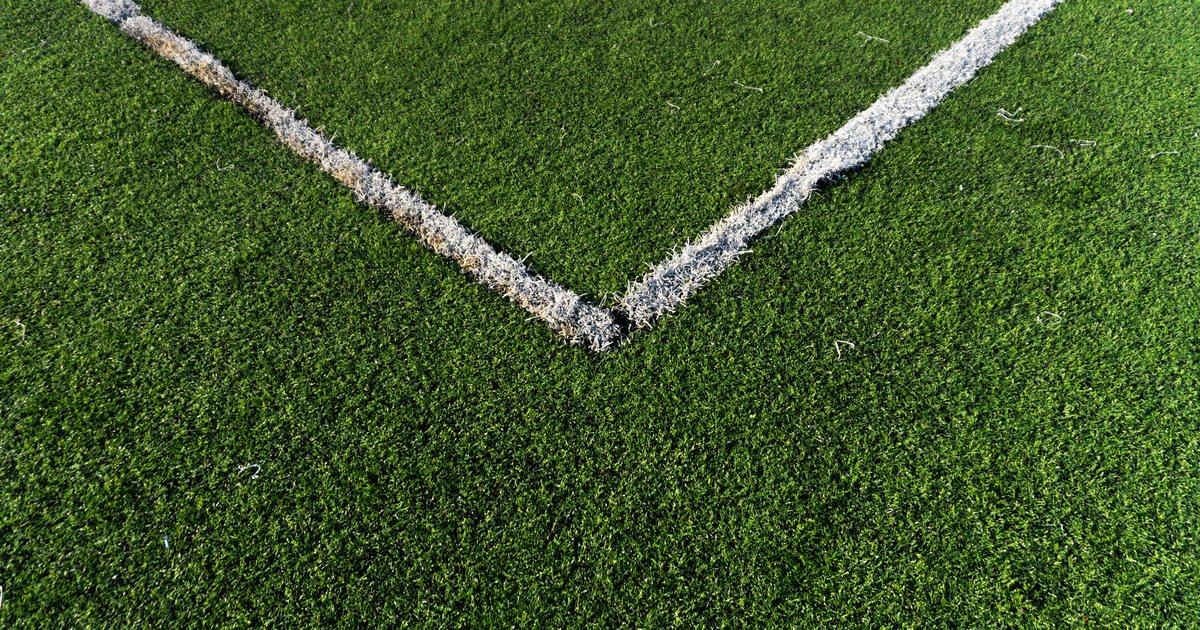
A section near the side yard felt different underfoot compared to the rest of the lawn almost from day one — not obviously wrong, just a little firmer, a little less give when you walked across it. It took me longer than I’d like to admit to connect that feeling to tension, because there was nothing visibly wrong with it.
For the first couple of weeks I chalked it up to that section sitting closer to the patio edge, figuring the base underneath was just naturally firmer there. What actually got my attention was watching my daughter run through the sprinkler — her stride hitched slightly every time she crossed that patch, the same small catch on every lap. That sent me down on my knees pressing a flat hand into the pile in three or four spots across the yard. The side yard barely moved back. Everywhere else gave a visible quarter inch or so before settling.
Tension Problems Don’t Always Look Like Anything at First
Turf that’s stretched too tight during installation doesn’t wrinkle right away — the opposite, actually. It lies unnaturally flat and firm, with almost no give underfoot, because the material is under constant pull with nowhere to relax. Over time, tight turf is what leads to bubbling or wrinkling later, once heat expansion adds even more stress to material that already has none to spare (the bubbling article on this site covers that failure once it actually shows). Turf that’s too loose is the opposite problem: it feels soft and slightly baggy, with small ripples that shift slightly when you walk across them, because there wasn’t enough tension to pull it taut against the base in the first place. Ours was on the tight end — firm, minimal give, and slightly resistant when I tried to press a finger into the pile at the base.
Part of why tight turf doesn’t look wrong at first is that the backing still has some stretch left in it, the way a rubber sheet stays smooth right up until it’s pulled to its limit — a section can be under real strain and still lie dead flat, because flat is what maximum tension actually produces. There was a second factor stacked on top of the stretching itself: that section got fastened down on one of the cooler mornings that week, before the afternoon heat set in, and I hadn’t left enough slack for how much the backing would want to expand once the sun hit it. Turf backing is plastic, and plastic expands with heat — pull it tight while it’s cool and it has nowhere to go once it warms up.
What I Did About the Tight Section
- Pulled back a corner of that section to check the base underneath — flat and undamaged, confirming this was a tension issue, not a settling or drainage issue.
- Pulled the fasteners along one edge of the section and released the material slightly, giving it a small amount of slack rather than leaving it pulled taut.
- Re-fastened at the same spacing, checking by hand that the turf now had a small amount of natural give across the section, matching the feel of the rest of the yard.
- Watched that section through the next hot stretch to confirm it wasn’t going to bubble now that some of the built-in tension was relieved.
I released tension along the whole edge rather than cutting a small relief slit in the middle, which is the shortcut a few yard-fix videos show. A slit relieves pressure in exactly one spot, but the pull isn’t coming from one spot — it’s spread across the whole panel, so a localized cut just shifts the strain to whatever’s nearest the cut and leaves a visible line in the pile. Working the entire edge loose and re-fastening at the original spacing brought the tension down evenly instead.
If your section is on the loose end instead, the fix runs the opposite direction — you’re adding tension, not releasing it: pulling fasteners along the loose edge, working the slack out toward the perimeter in small sections with a stretcher tool, then re-securing while the material is held taut. I haven’t had to do that side of it myself, since ours was the tight kind, but the same first step applies either direction — check the base before touching a fastener.
How to Tell This From a Loose Seam, and How Long the Fix Held
A tight or loose section can look enough like a loose seam that it’s worth ruling out first. A seam problem shows up as a visible gap or slight ridge running in a straight line where two pieces meet, most noticeable when you press right along that line and feel it flex or separate. A tension problem doesn’t follow a line like that — it’s spread across a whole section, with no particular edge where it starts or stops. If pressing a seam changes nothing but walking a few steps into the section does, tension is the likelier cause.
As for whether the fix holds — that section has now been through the hottest stretch of the season since without tightening back up or bubbling, which was the outcome I was actually worried about. If I were hiring this out instead, I’d expect a legitimate installer to start the same way: pulling back a corner to rule out a bad base before touching any fasteners, since re-tensioning turf over a bad base just means redoing the fix again next year. I never got a quote for a single-section re-stretch, but it’s a fraction of the work of a full re-install, which is the only other real fix if a section keeps failing.
What to Check on a New Install
Walk your entire lawn within the first week and pay attention to how it feels underfoot section by section, not just how it looks — a too-tight section feels unusually firm with almost no give, a too-loose section feels soft and slightly shifts underfoot. Catching either one early, before a hot season adds thermal stress on top of it, is a much smaller fix than waiting for a tight section to bubble or a loose section to develop visible ripples.